EDUCATION
"Our whole mission is to impact students' lives and make a huge difference. A lot of times, we're literally saving their lives."
22 April 2026







"Nexus prides itself on an education that is not just about exams. It goes far beyond grades, and looks at who your child is as a whole person."
I am Karrie Dietz, incoming principal at Nexus International School, Singapore, joining in August 2026.
Nexus is an international school in Singapore offering education for students aged 3 to 18. The youngest learners start in nursery in their own enclosed space, alongside kindergarten learners, and they go all the way up to Year 18, just before they go off to university. Nexus is an IB school, offering the Primary Years Programme from nursery through Year 6 and the Middle Years Programme from Years 7 to 9. From there, students move to IGCSE — the internationally recognized qualification for 16-year-olds — where they choose courses in subjects that interest them, before returning to the IB for the Diploma Programme in Years 12 and 13.
Ultimately, what makes Nexus Nexus is that the school prides itself on an education that is not just about exams — it goes far beyond grades. It looks at who your child is as a whole person, whether that is on the pitch, on the stage, or in coding, and there are all these opportunities around the classroom. Nexus has really passionate educators who get to know children on a really deep level, and relationships are at the core of everything the school does, extending into the parent community as well.
Nexus is really proud to have around 60 nationalities that call the school home. The current number of learners is 1,585, approaching 1,600. The school will not exceed 2,000; that is its capacity, but within that, there is a strong commitment to being a global community. Among those 60 nationalities, none accounts for more than 20% of the population, so diversity is embedded in daily life and in learners’ experiences. Whether it is Lunar New Year, Iftar, Christmas, or Carnival, the school celebrates what makes each community unique while firmly holding to the belief that there are more similarities than differences. And together as a whole community, that is one of the things that really sets Nexus apart from the crowd.
What Nexus is really seeing, now more than ever, is that its mindset around entrepreneurship and innovation sets it apart. The school is not just about grades — it is not just about teaching students from a book and giving them facts. It really asks students to apply what they learn, and rather than asking who they want to be when they grow up, Nexus asks what problems they want to solve. The learners are really globally minded.
For example, a group of learners created their own startup that produces coffee capsules for an espresso machine. They worked with a local coffee company, tasting, packaging, branding, and building the entire delivery system. On top of that, every profit they make from their own company goes to support a charity in the Philippines. There is this real, purpose-driven, problem-solving education that goes beyond the classroom.
Nexus also does the academic work really well and gets great results. Last year, a learner achieved 45 out of 45 on the IB, which is extremely difficult. Learners go to Cambridge or Northeastern in America, but there are also those who are really passionate about drama, and Nexus provides a best-fit career pathway so they can pursue it. I think the two together — the relationships and building those foundations, combined with the ability to support learners no matter where their passions lie — are key. Because of Nexus’s size, it has all the big-school facilities and the big-school feeling, but it is also a small-school community where everyone really does know everyone’s name, and the school can provide a really personalized education.
At the moment, Nexus is doing a lot of work to refine what it already does really well and ensure continuity. If there were all the different buckets a school should offer, Nexus has something in every one, and it is just about making sure that everything on offer is at the top level.
The swimming team, for example, is the best swimming program on the island — Nexus has had the middle school swim champions for the last four years. That standard is being maintained across sports, the arts, and music. The school recently held a big concert at the Botanic Gardens in Singapore, where over 200 learners performed, and it puts on regular shows.
The biggest focus is really preparing learners for life after Nexus. In the nursery, they are working on instructional language and basic phonics. In Year 6, learners are about to start their Primary Year’s Exhibition, where each learner has chosen a topic that is important to them. These are 10- and 11-year-olds, and some are looking at the effects of social media on youth today, while others are exploring the importance of storytelling and how ancient stories remain relevant. Each learner can pursue their own interests within a flexible curriculum, and because of the school’s size, Nexus can offer substantial support for individual interests while maintaining the rigidity of the IB curriculum.
What Nexus prides itself on most of all, and where I think the most development will be seen over the next few years, is entrepreneurship and digital technology. The school is award-winning for its digital technology curriculum. With AI, a lot is happening in that space, and Nexus is really keen to keep screen time intentional and purposeful. The school does not want kids on screens just for the sake of it, so it is very careful outside of the classroom — phones away for the day, screens away during social times — so that students can just be kids. But in lesson time, the focus is on how digital technology can really support teachers and enhance learning.
In the primary, Nexus uses a software tool called Writer’s Toolbox to help learners examine sentence structure and grammar. Because it is AI-rich, students can handwrite something, type it into the software, and receive immediate feedback. The teacher then coaches them on how to use it effectively. Teachers are noticing that the quality of written work is improving because learners are responding to feedback much more quickly with the teacher’s guidance. In secondary school, a similar piece of technology called Me-Up is used by the English team to help with longer essay writing. It supports reflective learner practice — the skill of being reflective and thinking strategically about areas for improvement — which is something Nexus is really trying to embed across its learning.
Returning to entrepreneurship, Nexus recently held a three-day event in which Year 10 learners — 14- and 15-year-olds — participated in a Young Founders Boot Camp. In one day, they learned how to go from a concept to an idea and then pitch real business ideas. The team that won was a group of 14- and 15-year-old boys who were frustrated that all their different smart home appliances — Alexa, Apple products, Philips lighting — did not communicate with each other. They designed a piece of software that would make everything talk to each other, did so in 4 hours, then pitched the idea to real business mentors and investors, and they actually won.
The week before that, Year 12 learners were designing prosthetic limbs for their IB project. They had spoken with a bilateral amputee who explained the challenges of living in Singapore as a prosthetic wearer, so they went away and designed solutions — one learner designed a prosthetic specifically for scuba diving, another for people who had lost their dominant arm and were instrument players. It is definitely very idea-driven, but turning an idea into a concept is not just about the idea itself — it is about making it a reality. It comes back to the problems you want to solve and to your position in the global community. That is what Nexus aims for all of its learners to achieve when they leave — that they can take their next steps and have a really positive impact on the environment around them.
Singapore is extremely competitive. There are schools tied to national curricula, but the benefit of Nexus is that it draws on the best parts of many of them — whether that is the British phonics system or the IB curriculum framework. Nexus’s incredible, state-of-the-art campus includes Olympic-sized pools, sports halls, auditoriums, and theatres, but because of its size, learners get to use them regularly. They have real access to these facilities, whereas some much larger schools have similar facilities for twice as many learners, which means Nexus learners have a truly enriched experience.
Nursery and kindergarten learners have specialist teachers every week. They have their homeroom teacher who delivers most of their lessons, but they also have specialist teachers for swimming — every week, all year round — as well as music with a music teacher and PE with a PE teacher, starting from age three.
In terms of where Nexus sits in Singapore, it really comes down to that more personalized education. I also think the diversity sets Nexus apart. It is probably the only school on the island that can genuinely say not just that it has a large quantity of nationalities, but that it has a spread as well. Many schools have a variety of nationalities, but they do not have the spread that Nexus does. With no single nationality accounting for more than 20% of the population, Nexus is a truly global community where everyone can feel at home.
Nexus will definitely continue to develop its policies and curriculum around technology, and it is really at the forefront of this. The leadership team is doing a lot of work on AI — how to use it responsibly, how to teach it responsibly — while also recognizing that it is here to stay. The school really wants to empower learners to stay relevant and to have good skills when they leave.
The next few years will really see Nexus embed everything it has been doing. Next year will be the school’s 15th year, which is a big birthday, and there is real excitement about continuing to build and seeing each of those areas grow. The brand has definitely grown, and Nexus is now one of the few international schools in Singapore that is still growing. A lot of schools are retracting, and the focus is really on getting the basics done really well so that everything else can shine.
The curriculum is refreshed every 3 years, and that will continue. The university office will continue to support the current cohort, and that cycle will start again. There is a student with an unconditional offer for the University of Cambridge, and one of the first learners is going to a drama school in the UK — a very competitive one, Italia Conti — so it is really about delivering best-fit pathways for the learners at Nexus.
Regarding facilities, updates are also underway as the cohort has grown. Nexus used to have very flexible open spaces, but over the last year and a half, some of those spaces have been developed into flexible learning environments — they can be big, open, collaborative spaces, but with movable walls that can be closed off for smaller-group learning. A whole new area for recreational sports has just been developed, with additional netball and basketball courts, as well as a pickleball court. Up in the IB space, this summer will see some developments rolled out to accommodate the growing IB cohort, ensuring the space works for individual study while also being rearranged for group gatherings, university fairs, and lecture- and seminar-style sessions. It is a really exciting few years ahead.
Nexus has a very active parent community. They host many big events — a Christmas Fair and an International Fair that celebrate everything — as well as smaller events like beach cleanups. The real magic, though, lies in the day-to-day experiences, such as when some parents drop off and pick up their children. Many parents still do this even though there is a bus service. That community feel means you will always bump into someone you know, and there is always something going on.
Nexus is really lucky to have parents who run events like knowledge-sharing sessions — one week, someone might share a tiramisu recipe from their home in Italy, and the next week, a parent who is a psychologist by trade might deliver a talk on personality types and how to deal with the move to Singapore. There are also groups like mahjong, tennis, and sustainable crafts. Parents even run a playgroup for younger siblings who are not yet ready for school.
I know it is a cliché, but it takes a village, and Nexus really does become your village. As an expat moving to a place like Singapore, you instantly find family at a school like Nexus because everyone is in the same boat and looking out for each other. That is something the school never lost as it moved to a larger campus, and a lot of work goes into maintaining it through coffee mornings and social engagements.
Moving to the academic side, there has been a lot of work this year around how Nexus communicates academic progress. The school really likes to celebrate learner agency, so students can talk to their parents about where they are making good progress. One of the things Nexus is also really keen to do is to ensure parents hear directly from the teacher. A lot of work has gone into making sure parents are well informed about where their child is based on their own potential — not necessarily benchmarked against the rest of the class, but based on what the school believes that individual child is capable of, where they are right now, and what they need to get to the next level. That is the progress teachers are reporting through parent conferences and reports.
Nexus sends home reports every year, but that alone is not enough. There is a weekly newsletter that highlights key points, and parents can sign up for weekly parent workshops that cover an overview of different aspects of school life — primary, secondary, and beyond-the-classroom achievements. In primary school, homeroom teachers also send an email home every week and maintain relationships with class reps to ensure everyone is on the same page, share learning updates, and keep families informed about what is needed. It has been a big piece of work over the last 18 months around communication — making sure that, amongst all of your thousands of notifications, you are really getting the information you need as a parent.
The biggest thing about Nexus is that it might not look like the school you went to as a child in terms of the everyday experience, but every single one of its learners is going to come out as an adult ready to take on the challenges of whatever faces them when they leave — be that in the arts, in sports, or in business. Wherever they land, the teachers at Nexus are incredible and get to know your kids really well so that they can best support them.
I would like to express my excitement about joining Nexus as the incoming principal in August 2026. From everything I have learned about the school — the community, the values, the incredible learners and educators — it was a very clear choice for me. I chose Nexus because it truly lives out the kind of education I believe in, one that goes beyond grades and develops the whole person. I cannot wait to be part of this community and continue building on the outstanding work already done here.
Share this:


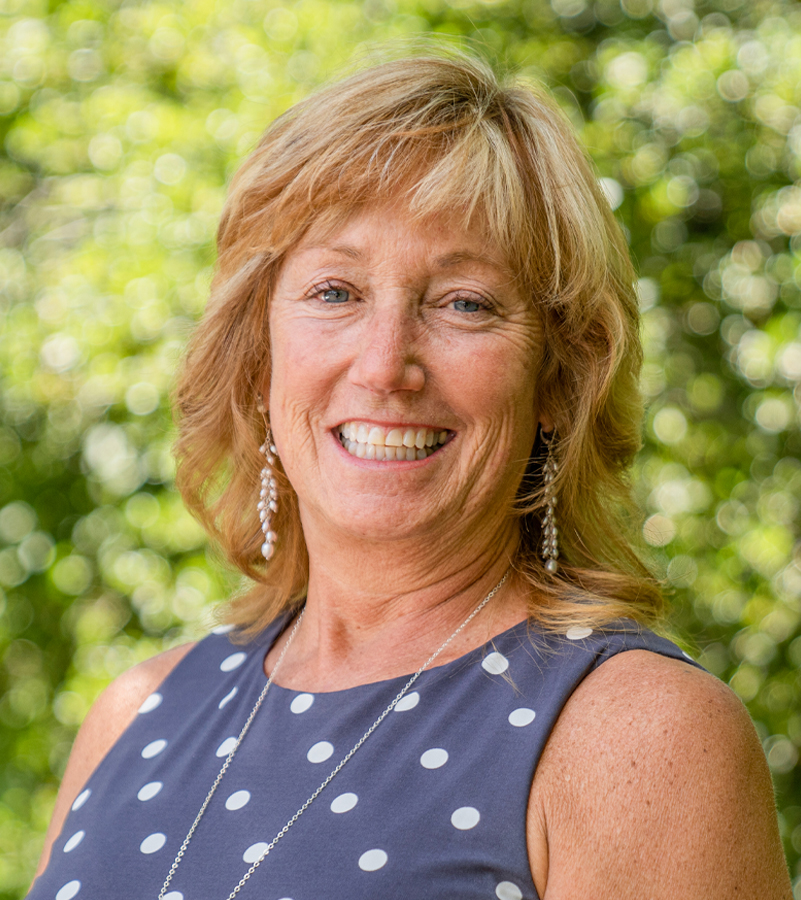
"Our whole mission is to impact students' lives and make a huge difference. A lot of times, we're literally saving their lives."
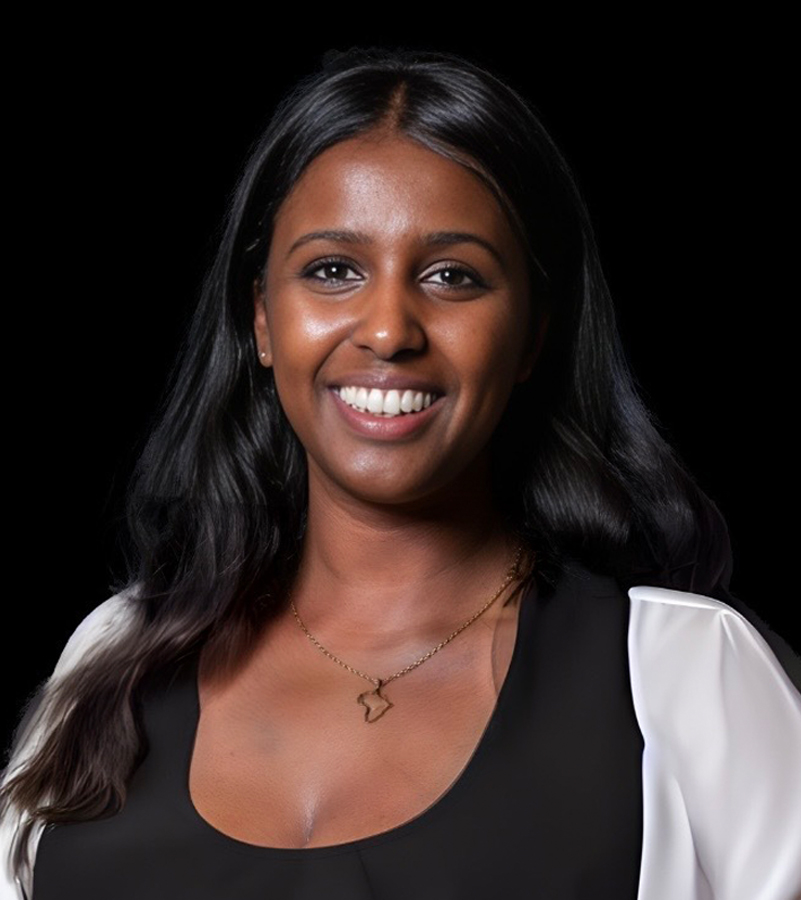
"We try to meet our students where they're at, making the program fun and engaging."
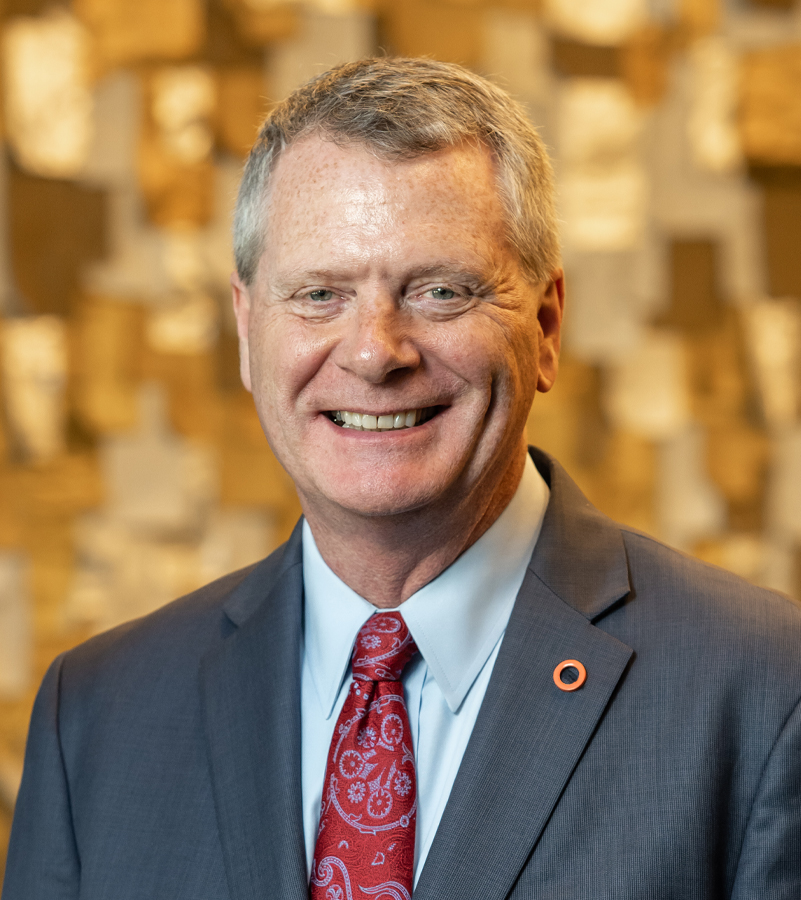
"Today’s learners and employers need clarity in a fast-growing credential marketplace, and ABET helps provide that confidence through independent quality assurance."

Your request has been successfully submitted. Please wait for a reply from our manager, he will contact you as soon as possible.