Could you please introduce yourself and give a quick overview of Science 37?
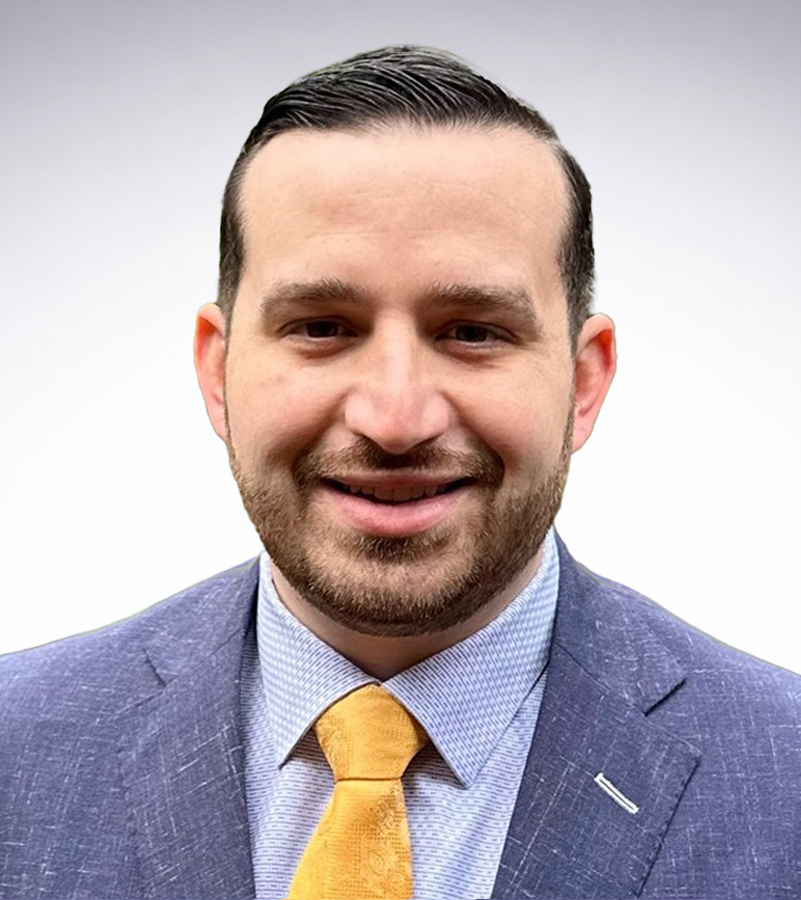
I’m Tyler Van Horn, the CEO of Science 37. I come from the Contract Research Organization (CRO) industry, which is a core part of the clinical trials field. I’ve been in the industry for quite some time and have been with Science 37 for over four years. I lead our strategy and commercial organization, and I stepped into the CEO role about a year ago.
At a high level, Science 37 is a patient access organization for clinical research. Our approach differs from others operating in this space because we function as a direct-to-patient clinical trial site. We recruit and enroll patients into research, but we do it differently.
Typically, research is geographically restricted. For example, in the Raleigh-Durham area, we have large teaching hospitals like Duke and UNC. They conduct research and identify patients within a 20-to-30-mile radius of their facilities. Those patients must travel back and forth to the hospital several times over many months. This inevitably excludes individuals who live even 30 to 45 minutes away.
What we do is disaggregate the physical infrastructure of healthcare from clinical research to go directly to the patient. We conduct trials within the patient’s home or local healthcare infrastructure. We utilize investigators with broad state licensure who can see patients anywhere in the U.S., supported by research-grade nurses who travel to the patient’s home to conduct assessments. With our specialized logistics team, we ship study drugs and lab kits directly to the home, allowing us to access any patient, anywhere in the United States.
Typically, only about 5% to 8% of patients have geographic access to clinical research. We provide access to the other 92% of patients who would otherwise be unable to participate. Consequently, we enroll patients much faster than traditional sites. We were founded on this premise, and we remain the only organization providing this specific end-to-end project completion. We’ve been operating for 11 years across more than 185 trials. Notably, the FDA has visited us three times in the last 18 months with No Action Indicated (NAI), which is a significant validation of our work.
Could you briefly outline Science 37’s core focus and main service offerings today?
Our primary offering is the direct-to-patient clinical trial site. Similar to a traditional hospital site, we contract with either the study sponsor (the pharmaceutical company) or the CRO they have hired. While we used to offer standalone technology and recruitment services, we have narrowed our focus. We still perform recruitment, but only as part of our integrated site offering. This is where we are highly differentiated; no one else can execute the site-side responsibilities the way we do.
How would you characterize the current competitive landscape? What are the distinct strengths of Science 37 compared to traditional trial models?
It isn’t necessarily an “us-versus-them” situation. The traditional model is very geographic and infrastructure-focused. We offer the only end-to-end clinical trial site that goes directly to the patient.
Often, a sponsor will have 50 traditional U.S. sites, and we will be one of them. However, the power of our model is that we can offer enrollment nationwide. This allows us to typically enroll the equivalent of 15 to 30 individual physical locations within our single “site.” We give clients access to “clinical research deserts”—rural areas that lack infrastructure. We are seeing more sponsors adopt this approach, which is a win for both the pharma companies and the patients we serve.
Besides North Carolina, how is Science 37 expanding its presence in terms of geography and therapeutic areas?
Our headquarters is in North Carolina, where about 30% of our staff is based, but the rest of our team and our doctors are spread nationwide. We are hiring quickly to meet a significant surge in demand, which is a positive outlier in an industry that has been somewhat stagnant for the last 18 months.
Therapeutically, we are agnostic, but several key areas have emerged as strong fits:
- CNS, Respiratory, and Pulmonology: Areas where we have extensive experience.
- Cardiology and Metabolism: We are seeing great momentum here.
- Rare and Ultra-Rare Diseases: These patients are often geographically dispersed. Traditionally, sponsors had to fly these patients to centers like Duke or UNC; now, we bring the trial to them.
- Pediatrics and Movement Disorders: We’ve seen great success here because these trials often involve patients who cannot drive themselves, placing a massive burden on caregivers. By removing the travel requirement, we make participation possible for families dealing with conditions like Fragile X or Prader-Willi syndrome.
What approaches does Science 37 use to engage and support sponsors and patients throughout the trial process?
This is a relationship-driven industry built on trust, and trust requires transparency. Often, we are brought into a trial midway when traditional sites are struggling to meet enrollment targets. Our job is to deliver on our commitments to build that long-term trust.
I’ve noticed a tendency in this industry to over-promise and under-deliver. We prefer to under-promise and over-deliver. It is a human-centric approach rather than a transactional one.
From a patient perspective, we prioritize continuity of care. The same nurses and doctors interact with the patient throughout their entire journey. Because we are in their homes, we build strong bonds—we know their family photos and their pets’ names.
The convenience is paramount. Instead of a patient driving 45 minutes to sit in a hospital for six hours, they can stay in their own environment. While a nurse preps an assessment, the patient can relax or watch Netflix in their own living room. Because of this reduced burden, our trial completion rates are 10 to 15 percentage points higher than traditional sites. If 100 people start a traditional trial, maybe 70 finish. For us, that number is typically between 85% and 92%.
What key message would you like to share regarding Science 37’s mission and future direction?
Our culture is defined by constant learning. We are a lean organization, and we believe we are executing the future of clinical research. Many of our sponsors have told us exactly that over the last few months.
For 30 years, the industry did things the same way. We are challenging that by staying open-minded and experimental. We always think “patient-first”—a perspective that is often lost in the broader healthcare ecosystem.
Finally, we value transparency for all stakeholders. Employees can’t do their jobs without information, sponsors can’t make decisions without data, and for patients, being well-informed is a moral requirement, not just a regulatory one. Transparency is the key to everything we do.