Could you please introduce yourself with your name and position?
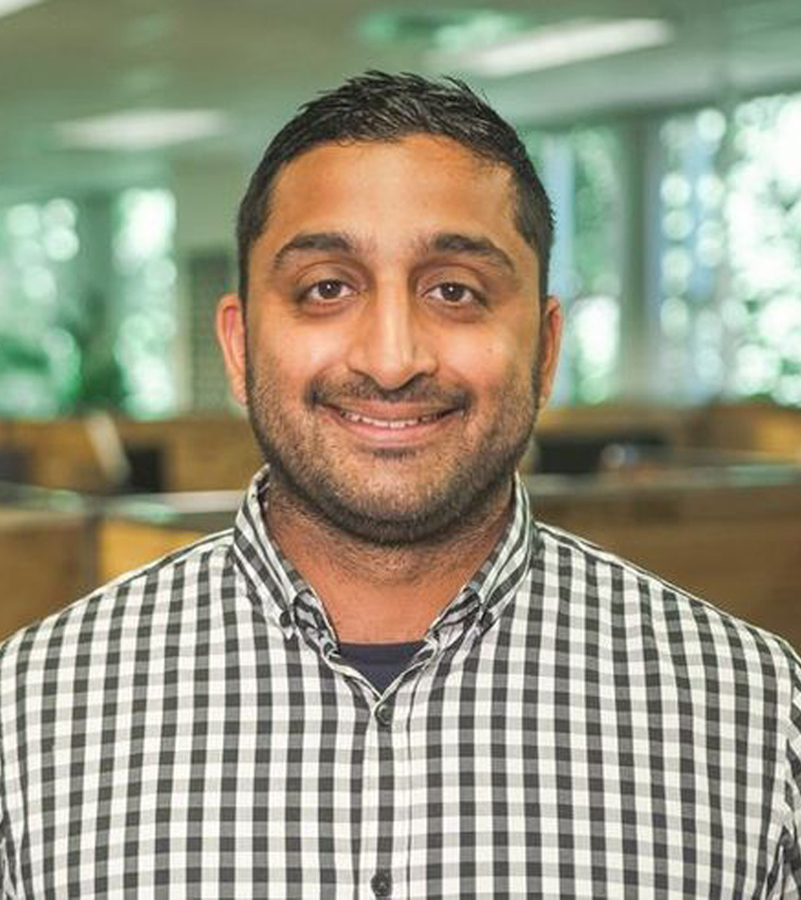
My name is Prem Kumar, and I’m CEO and co-founder at Humanly.
What do you think has been the biggest reason for Humanly’s success in HR technology? Are there specific actions the company has taken that have made the biggest difference?
Our goal is to allow all candidates to enter a process, be interviewed, and be evaluated. We want to interview the world. The biggest factor for us that has led to our success is that we found high-volume hiring, where large companies that pay hundreds of thousands of dollars in recruitment marketing, such as ads on Indeed and LinkedIn, only have the human time to engage with 5 percent of the people who apply.
The biggest thing for us is leveraging technology and the changes that have occurred in AI over the last few years. The cost of AI infrastructure has gone down significantly, and talent acquisition leaders are becoming more comfortable with technology interfacing with job candidates. Ten years ago, the technology wasn’t advanced enough to facilitate a two-way conversation with a chatbot and a job candidate. It certainly wasn’t good enough to have an AI interview with a job candidate, but now it can.
Our goal is to ensure that instead of only 5 percent of candidates getting a look, all candidates do. This outcome increases the chances of finding the right fit and reduces the time to hire from approximately 44 days to five days. That’s been a big goal of ours.
How would you explain Humanly’s main business and what it offers today? How do these offerings help HR teams in their daily work?
We generally sell to mid-size and enterprise companies. These are companies that receive a high volume of applicants. In our daily work, we take the amount of time it takes to fill a role from 44 days to five days. We achieve this by guiding candidates through a process that typically takes a month. We can do it in a couple of hours. They proceed from an initial application to a check-in with our chatbot to ensure they’re a generally good fit, followed by an automated phone screen conducted by our AI, and then a video interview also facilitated by our AI. All of that can happen in a few hours.
Not all roles (job positions) are suitable for AI to automate every aspect of them. In many cases, we’re one step of the process, but we’re getting the right candidate to humans much faster. Currently, while 95 percent of candidates are being ignored, the 5 percent who aren’t still wait a week. You lose candidates in that process. We reduce the time to hire and save a significant amount of money by streamlining steps that would otherwise take a month.
This allows recruiters to focus on more strategic conversations, like selling candidates on their employer brand and orchestrating the candidate experience. Our customers, for example, might conduct seven phone screens a day, taking notes, and then input them into their applicant tracking system. We take care of that for them. This is how we impact hiring teams.
What makes Humanly stand out in the recruiting technology space compared to others? What do you do differently that helps you stay ahead?
Traditionally, most of the tools in the space have been focused on tracking systems of record, like a database of candidates. Then, tools began to emerge that helped engage candidates through messaging, such as candidate relationship management tools. What we’re doing is actually engaging in two-way conversations with candidates, whether it’s a screening conversation or an interview. Conversational AI for recruiting is our category. What sets us apart within that category is that many buyers currently have multiple tools for emailing candidates, another for chatbots, another for SMS, and yet another for human interviews. What we’re finding is that if you have six or seven different AI tools, you’re not truly investing in AI, because AI is only as powerful as the data. If you split your training data into seven different tools, you aren’t building the best experience. Our differentiator is being present in all the various channels where candidates are engaging, and meeting them where they are, to then screen and interview them.
Another thing is, I consider us a data company. When I was at Microsoft, I worked on bringing data into the Microsoft ecosystem, which gave me a sense of what can be done with large volumes of data. What we’re doing with job data is making our interviewers better at evaluating. Our AI interviewer is more effective at assessing candidates than I am for any role. And that requires a significant amount of data over time.
Where is Humanly growing right now, and what are the plans for the future? Are there new markets or projects you’re especially excited about?
We’ve been growing as a team, and from a revenue standpoint, we’re excited about our growth there. The thing we’re most excited about is delivering on a vision where customers can tell us about their job requirements, and we can have qualified candidates scheduled within minutes. To achieve this, in addition to automating the initial touchpoints so you can interview everyone and stay in touch with silver medalist candidates, we’re focused on building relationships with job candidates. We offer features such as career coaching, assistance with resumes and the ability for candidates to share their screen with our AI practice interviewer for personalized resume feedback. We aim to foster strong relationships with candidates, and through data, we can more effectively match candidates with suitable jobs. We think the current method of matching resumes to job descriptions is outdated. By talking to candidates, engaging with them and having data on both sides, we can match candidates more effectively.
How does Humanly attract new clients and take care of its partners? Can you share some of the ways you build and maintain those relationships?
Partnering with other systems that sell to our customers is really important for us. I always say, if it isn’t built into the recruiting workflow, it doesn’t matter. If it’s off to the side and you have to sign into another tool, it won’t work. We have strong relationships with applicant tracking systems and other tools our customers are using, such as SAP SuccessFactors and Mitratech. We want to deliver to customers a solution that integrates well, so if we don’t do something, we want to partner with someone who does.
From a customer standpoint, we sell directly with our sales team. We produce a lot of content on where AI is headed and want to be part of the discussion. We help our customers on their AI journey, and we don’t expect them to dive into the deep end right away. We also host numerous small events with talent acquisition leaders to discuss the industry and its challenges. We integrate with partners, provide advice, and meet customers where they are. Additionally, once our AI begins learning about a company, we can tailor our services to that company’s unique strengths, helping us better evaluate job candidates.
What’s the main message you would like to share with the community and our readers about Humanly? What do you want them to take away from this conversation?
The main message for us is that we feel hiring right now in high-volume scenarios is broken. Large companies, even with a high volume of applicants, typically interact with only a small percentage of candidates based on keywords in their resumes. We want to give our customers the ability to interview everyone who meets basic criteria, which increases the chance of picking the right person. If I had 100 people, I wouldn’t talk to just five to choose the best one—I’d try to talk to all 100. We also aim to help companies build a pipeline of candidates for future roles. We use AI to help teams operate at the scale of a much larger group by enabling them to engage with every candidate who meets the basic criteria.
Is there anything else you want to add?
One of the biggest new things we’re doing is around AI-driven video interviews. We’re the first to market with this feature, and we’re setting the tone for conversational AI in recruiting. We’re also working to ensure that every candidate who meets the basic criteria receives an interview, especially in high-volume hiring scenarios. Another point I often make is that LinkedIn has built a great database of profiles. Still, we are focused on building the world’s largest database of people we’ve actually interviewed recently. This makes a huge difference in how we engage with candidates. The primary difference between LinkedIn’s database of profiles and ours is that we’re messaging candidates with whom we’ve actually had conversations, which is more effective than dealing with outdated or incomplete profiles.