As travelers abandon spectacle for substance, one small-ship operator has spent 30 years reaching rivers no one else can navigate.
The most sought-after destinations in travel today are not the ones that are easiest to reach. They are the ones that feel like they haven’t been found yet—remote villages, working waterways, and communities that haven’t been staged for the tourist gaze. The problem is that the infrastructure of modern tourism, built for volume and efficiency, is structurally incapable of delivering them.
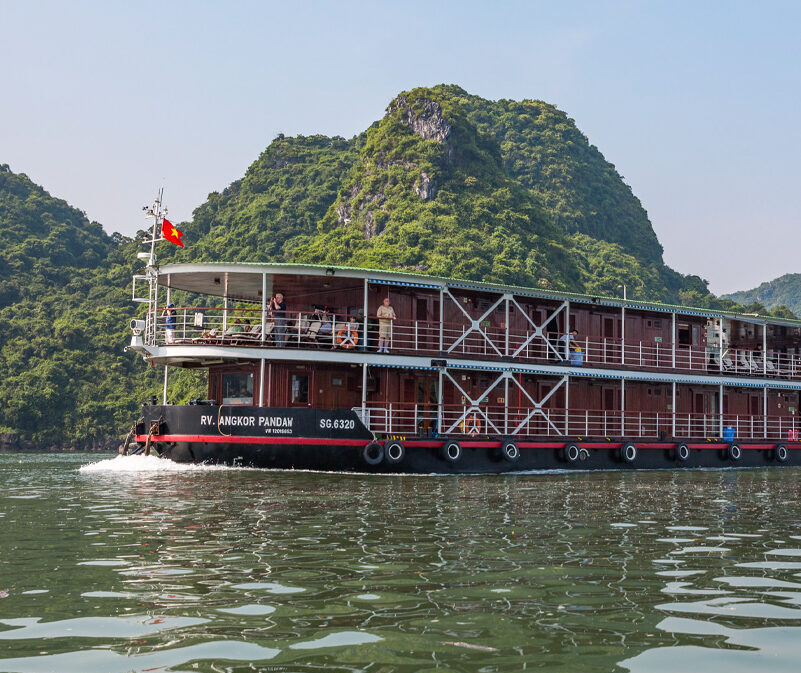
Pandaw Cruises, a small-ship river cruise company with more than three decades of operations across Southeast Asia and India, was built to solve exactly that problem. Operating handcrafted teak and brass ships modeled after colonial-era river steamers, Pandaw accesses waterways—the Mekong, the Brahmaputra, the Kerala Backwaters, and the Red River of Northern Vietnam—that mainstream cruise operators cannot navigate. Its ships carry between 10 and 30 cabins. That is not a limitation; It is the product.
“We see ourselves not just as a cruise operator, but as a company that helps connect travelers with the history, communities, landscapes, and living cultures of the destinations we operate in,” says Pandaw’s leadership. “Our smaller ships, local crews, and destination-led approach allow us to deliver a style of travel that feels more intimate, flexible, and experience-driven than conventional cruising.”
The model operates on a logic that inverts standard cruise economics. Where large-ship operators maximize revenue per voyage through scale—thousands of passengers, standardized itineraries, onboard spending—Pandaw maximizes depth of access through smallness. Ships small enough to dock at rural communities. Crews and guides sourced from villages along the routes, bringing firsthand cultural knowledge that no briefing document can replicate. Itineraries built around local cuisine, crafts, heritage, and everyday life rather than curated highlights. The analogy that holds is not to luxury cruising at all—it is to the distinction between a chain hotel and a boutique property embedded in its neighborhood. One delivers consistency. The other delivers place.
Sustainability certification bodies and travel accreditation frameworks have begun formalizing exactly this distinction. Pandaw is currently under review with Travelife, an internationally recognized sustainability accreditation standard that evaluates operators against documented criteria for community impact, environmental responsibility, and destination-sensitive practices. Accreditation would give the company’s approach the kind of third-party verification that an expanding segment of high-value travelers and travel advisors now require before booking.
“There is a growing demand for travel that feels slower, more personal, and more connected to local culture,” the company notes. “If operators cannot demonstrate that their model genuinely supports the communities and cultures it markets, travelers who care about those things will find the ones that can. The market is becoming more discerning, not less.”
Pandaw’s primary geography—the Mekong corridor through Vietnam, Cambodia, Laos, and Thailand, alongside its expanding India portfolio—is not arbitrary. These are regions where the gap between what mass tourism offers and what culturally motivated travelers want is widest, and where small-ship access creates a competitive position that vessel size alone cannot replicate. India is now a growth priority: the Kerala Backwaters route, launched in late 2025 aboard a 10-cabin ship, exceeded demand projections quickly enough that a second vessel, the RV Kerala Pandaw, is already under construction and scheduled to begin sailing in early 2027. Shorter three-night and four-night itineraries are also in development, targeted at regional Asian travelers for whom river cruising has historically been an unfamiliar format.
The travel industry has spent decades treating authentic cultural access as a marketing claim. Pandaw has spent 30 years treating it as an engineering problem—one solved not by branding but by building ships small enough to go where the story actually is. Whether the broader industry follows that logic or continues optimizing for scale while the destinations that made travel worth taking slowly close themselves off, is a question the market is beginning to answer without waiting for operators to catch up.
Learn more about Pandaw Cruises at www.pandaw.com.