CLINICAL RESEARCH TECHNOLOGY
"We believe that what we're doing here is the future of clinical research."
14 February 2026





"We can see certain glycan patterns change up to 10 years prior to someone developing diabetes, a heart attack or stroke, and many other conditions."
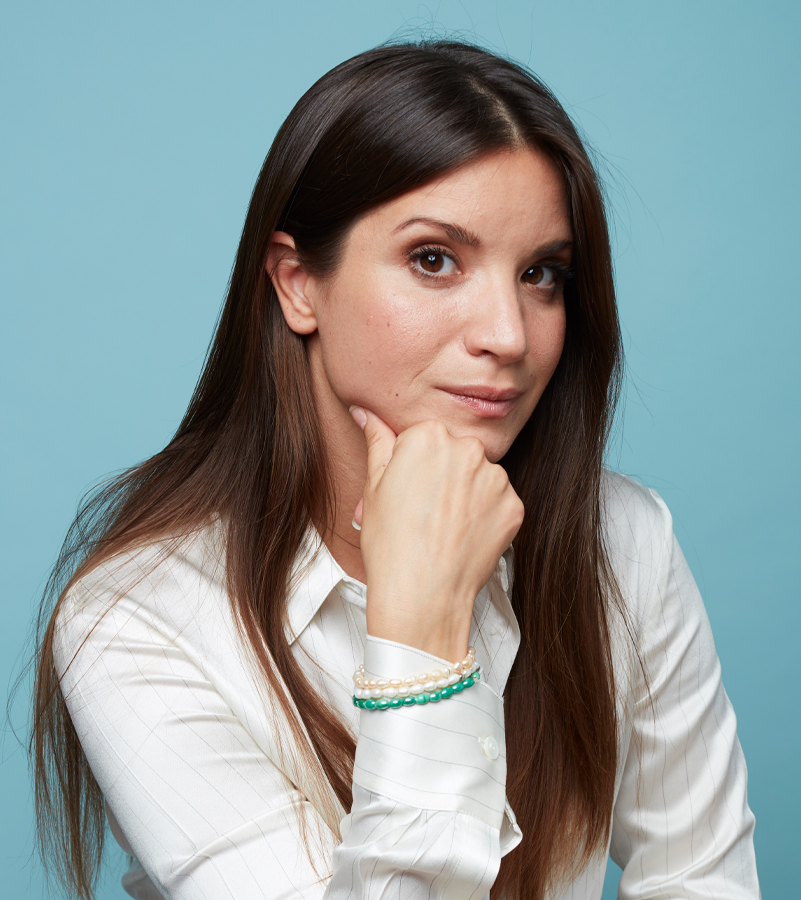
I’m Nikolina Lauc, co-founder and CEO of GlycanAge.
There aren’t many glycan companies. This field was kick-started by my father’s research institute. He started in this space — glycobiology — 35 years ago. He was also in genetics, but he realized you can’t really understand biology if you’re just looking at genes; you need to look beyond them. Glycans integrate genetics, epigenetics, and environment.
In 2006, they started the first large-scale study of the human glycome. The first 1,000 glycomes were analyzed in our lab in 2006, and we then developed these methods to examine this part of biology at scale. We have now looked at over 300,000 human glycomes, representing 83% of the global glycan analyses conducted in our lab. We kick-started the field of high-throughput glycomics, which is quite unique.
We started as a pure research institute 20 years ago — nothing commercial, purely grant-funded. We now have over 40 million in grants to develop the core technology, and then we commercialized it in 2020. My father convinced me to do business with him.
I was in a different industry before — tech — and we were doing really well financially. Personally, I was doing much better financially in that industry, but it lacked a mission; it had no meaning beyond the financial impact. I grew up with two scientists, and they were always telling me that maybe it’s working, but it has no meaning. He convinced me that we should do this together.
Even scientifically, our first preprint on GlycanAge was on the 10th of December 2013 — the same date that the first epigenetic clock was published by Steve Horvath. We literally published it on the same day in 2013. Before that, telomeres were the initial focus for measuring aging, but we realized they are more relevant to the aging of a single cell than to that of the whole organism. There are many labs that study epigenetics, but few that study glycomics, so we are certainly the best in the world in glycomics.
On the biological age side, the main questions are whether it can be modified and whether it’s reliable at the individual level. You have to give a reliable number. Of course, there are many factors of aging. We measure immune aging — inflammation — and that’s not all of aging, but it’s a big component that contributes to many chronic diseases and significant mortality risk, so it covers a lot.
Compared to other tools, our measurement is a lot more stable. The measurement error is less than a year, so if you see a year change, that’s actually a biological change, not a measurement error. Comparing that to epigenetic clocks, the error can be up to 10 years — you can be 10 years younger in the morning and 10 years older in the evening based purely on measurement error. That’s due to the lab tools, which use the Illumina array designed for research and always include a 10% measurement error. If you’re analyzing a large cohort of thousands of people, the error margin doesn’t matter, but when you translate it to an individual, it doesn’t give reliable individual results. Our measurement exceeds what would be required even for a clinical grade.
The other key factor is responses to interventions. We have the most evidence from placebo-controlled trials showing that this responds to different interventions, and there’s something you can do about your glycan aging before it becomes a problem.
In June, we’re organizing a conference in Dubrovnik. It’s a conference that has been running for — I think this is the 14th year — and it’s with Mayo Clinic, called ISABS (International Society for Applied Biological Sciences). The last two days are dedicated to inflammation. The 19th is very scientific; we’ll have Dr. Claudio Franceschi open. He coined the term “inflammaging” 25 years ago, so the theme is 25 years of inflammaging. Then, on the 28th, we focus on clinical practice—how do you apply it?
We specialize in glycan analysis. That could be for research—we still do a lot of research and cohort analysis. It can also be for private clinics, and it’s available in 2,000 clinics globally across 64 markets, last time we checked. We also have it available to consumers. The core business is analyzing glycans, and, in addition, interpreting the data and making it actionable and meaningful for health impact.
We have many tools to measure acute inflammation — more closely associated with acute events like infections —, but they don’t capture the low-grade chronic inflammation that accumulates with age and links to chronic disease. Chronic disease doesn’t develop overnight; it develops over decades. Most of the tools we have are designed to detect a problem when it’s already there or significant enough to require medical intervention.
With this type of inflammation, we can see certain glycan patterns change up to 10 years prior to someone developing diabetes, a heart attack or stroke, and many other conditions. It can tell you, up to a decade in advance, that you’re heading towards a problem — but you’re not yet symptomatic, and you can still do something from a lifestyle perspective to avoid the condition entirely.
We’re also not just measuring the level of a certain protein in blood. Glycans regulate the function of proteins, so we’re looking at the molecules that are actually making your antibodies, in this case, more pro-inflammatory or anti-inflammatory. We’re looking at how they’re actually functioning. These are functional molecular markers that will eventually be part of routine screening, telling you that you’re heading towards a problem before you’re actually there.
In China, we have a local lab, and we’re predominantly B2B there. So clinics can work with us, but you can’t buy it as a consumer in China. Mexico is the same — we have some clinics, but they’re not available directly to consumers. In a lot of places in the world, yes, but in a few places, not yet — China, Russia, and we need to wait for some things to stabilize in the world.
The goal is to make it globally available. In places like India, this type of analysis isn’t currently available, and one of our goals over the next few years is to establish a lab there so we can cover Asia alongside the West.
Longevity has become mainstream in the last five years, but aging research has been around for much longer. We were among the very early pioneers in aging research. We now have over 350 peer-reviewed publications. We had been doing this for 20 years before we became a commercial company in 2020 — we had been doing it scientifically. I think we had a lot more value to bring to the market than many very new companies that have just started their research and are perhaps going to market a bit too early, making claims they can’t support with good evidence. That’s the main thing that sets us apart.
The other differentiator is that we’re focusing on glycans. Everyone else is looking at epigenetics or standard clinical tools. The most widely used biological age tools are those built on clinical markers — assigning an age to blood work that has been used in practice for, in some cases, almost 100 years. You’re not measuring anything new; you’re just putting a different interpretation on it. We know the tools used now are more focused on detecting disease once it’s already there, rather than predicting it.
With epigenetic tools, they still need to correct the method, so it applies to an individual without this huge error margin — so that if you see your age go up or down, you can interpret it alongside something you’re doing, not just a random change. The precision of our measurement and the focus on a different part of biology is what make us stand out.
CRP (C-reactive protein) and many acute inflammatory tools are already standard practice and widely used. We have many studies — for example, on predicting heart attack and stroke — that show glycans are predictive beyond these markers. We’re capturing the low-grade chronic inflammation that current standard tools miss.
The consensus is now moving in this direction. The American College of Cardiology agrees that most cardiovascular disease is driven by chronic inflammation and that we need better tools to measure it in practice. Measuring inflammation is already standard — but now we have a new way to do it, and we need to demonstrate that this addition provides more information than what we use today.
Most of our health problems today are related to chronic conditions that we start to develop in our mid-30s and early 40s, but the heart attack happens in our 60s or so. If we’re waiting until later in life to intervene, the interventions we have are quite radical, costly, and high-risk. If we address things when we’re young, it can be as simple as modulating stress, getting more rest, or sleeping properly — especially for busy executives. These lifestyle changes are more modifiable and more closely related to what we actually control on a daily basis.
Eventually, these tools will be broadly available through your healthcare provider. You’ll be able to access them without having to spend money on them, because it will be a standard package that everybody receives — measuring your health while you’re still healthy, and telling you whether you have a risk of certain conditions in a way that those risks are modifiable, because glycan risk factors are modifiable.
If you have a specific signature that predicts or is associated with future cardiovascular disease risk, it will change with exercise. You can start exercising more in your 30s, help modulate this risk, and maybe push the onset another decade into the future. The same applies to diabetes. Any weight-loss modalities, as well as fasting, modulate the signature predictive of diabetes. You can know this in your 30s, early 40s, or even 50s, and do something about it before it actually becomes a lifelong chronic condition.
At the event in June, our goal is to bring together a great lineup of experts, both academic and clinical, who are at the top of their fields. They’ll be sharing their practice and data, which are about to be published. We really want to start the conversation in this space because, as a theory — and this is what our tool measures — inflammation is now 25 years old, and it’s time to apply it in practice. It’s past being just fascinating academic literature. It’s time to do something with it.
Share this:



"We believe that what we're doing here is the future of clinical research."

"We built a model that invests in technical capabilities, enabling technology and continuous clinical training so that we can match in-hospital levels of care at home."

"What sets us apart is our visibility as a lifestyle-oriented brand that's approachable, backed by medical expertise, powered by the best technology, and committed to offering a great customer experience."

Your request has been successfully submitted. Please wait for a reply from our manager, he will contact you as soon as possible.