


“Could you please introduce yourself, your position, and your company?”
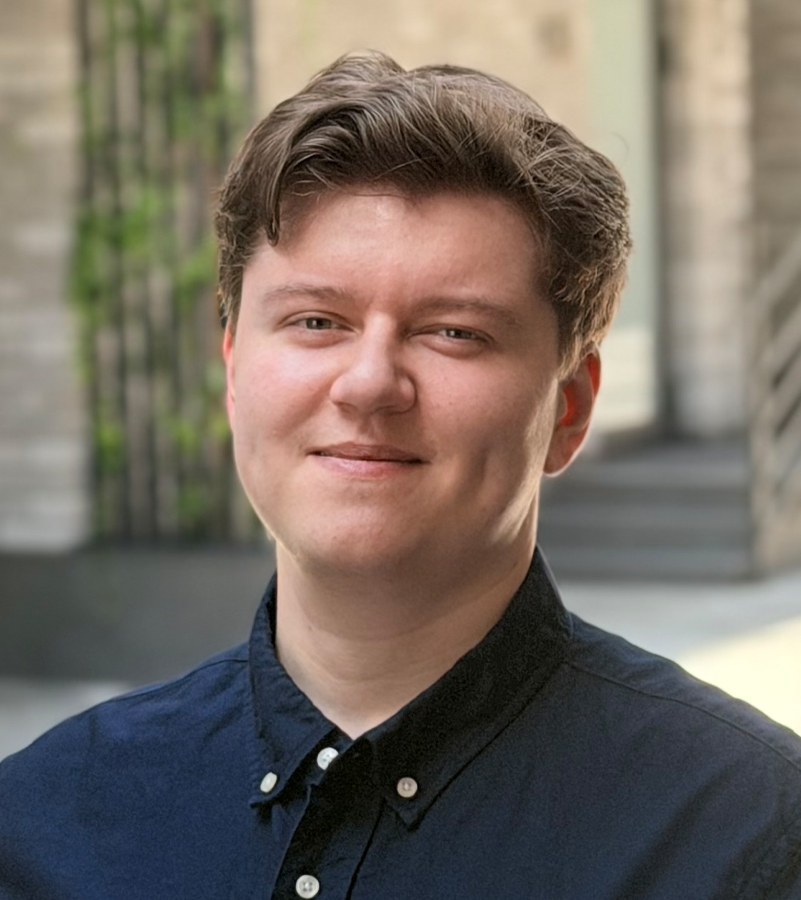
Hello everyone, my name is Valentin Tsaranov. I’ve been the Chief Operating Officer at EVEGOPLAYON for the past 1.5 years.
“Could you give us a brief overview of your company, so we have an idea of what EVEGOPLAYON is?”
Our company works in 3D and 2D graphics. We’ve been doing art outsourcing for five years — we’ll officially hit our five-year mark this August, though the company has actually been on the market a bit longer. We’ve been in Uzbekistan for three years; we celebrate our third anniversary here this September.
We work across a wide range of art, from 2D to 3D, and partner with a huge number of international companies — without exaggeration. We have more than 20 regular clients across the US, Europe, and Asia. Right now the company has almost 70 artists working across different areas, including management.
“EVEGOPLAYON has quickly established itself as a reliable partner for art content outsourcing for game studios. What do you think is the key factor behind the company’s rapid growth and success since it was founded?”
My answer breaks down into three parts.
First: the company was founded by people with a lot of experience in 3D and 2D graphics — people who started out making this content by hand and worked their way up to management. Our entire leadership team came from various game dev studios — mostly non-outsourcing studios, though some had outsourcing experience too. Among the bigger studios, I’d point to places like Wargaming and Gaijin Entertainment; some of us also came from large outsourcing companies, which I won’t name.
Because we’d been on the client side ourselves, we understood exactly what customers expected from us — we knew the specifics of the work from experience with large, complex pipelines. That let us integrate quickly into almost any workflow.
From the start, our studio focused on the areas where we had the strongest expertise, rather than chasing headcount or project numbers. Really, the studio began as a kind of quiet haven for artists who wanted to work with multiple clients and projects, and break free from the walls of whatever single project they’d been on. Looking back, that approach became our main trump card: consistency.
By 2024, we’d been in the 3D graphics market for a bit over two years, and we could have kept growing organically just by producing content and letting customers come to us. But that’s not really our way — we wanted to build real relationships with clients, not just transactions. IT, and gamedev by extension, can be quite insular — people work within their own four walls, especially now that so many teams are remote, even at big companies. So we decided we needed to start attending conferences.
In 2024 we went to our first conference — GDS in the Philippines, its inaugural edition, a subsidiary of the larger Canadian XDS conference. We happened to catch it early, partly by chance — it was simply the first solid conference after the New Year, so we went. We weren’t chasing quick wins; we decided to make attending international conferences a permanent part of how we operate. That year we also went to several others, including local ones like Korea’s G-STAR, and we liked it. We built a few strong contacts there that we’ve continued to develop.
Honestly, building relationships — especially in Asia, where our first conferences happened to be — wasn’t easy. People there have a particular mentality and value consistency highly. That’s actually our second key to success: patience, and getting comfortable with consistency. We keep going to the same conferences, we keep in touch with old clients, and we never let that contact lapse. We’re not aiming to just sign a contract and walk away, assuming the client is locked in and we don’t need to worry anymore. We try to stay in constant touch and meet in person whenever we can. Some clients come to us in Tashkent, but either way, we make sure to connect and meet.
The third key is how we treat the people who work for us. As I said, the studio began as a small, quiet space for artists — there was never really a plan for aggressive growth. But because a lot of our former colleagues and friends saw how calm and sane our environment felt compared to the big studios, they started asking to join. We processed those requests as we could and began inviting people in. Organically, the projects we were working on grew, and it snowballed — we ended up with a team of around 30 people, most of whom already knew each other, whether as friends or friends-of-friends. That existing trust let us keep building the studio on solid ground.
As an example, I’m in constant contact with people at every level — including the junior artists here in Tashkent. We spend time together, go to events; on Fridays after work we’ll often get together as a group. I stay open to that, and I actively initiate those get-togethers. I think building genuine human relationships has had a real impact on the studio’s growth — it’s let us build and keep a team we can rely on, with consistent quality. We’ve kept at that for five years. Looking at our management and leads today, a huge number of them started out working with us and are still here, doing well, and planning to stay.
“Your team provides both 2D and 3D services, including co-development for game developers. Which of your services is in highest demand today, and how are client needs and expectations changing?”
I wouldn’t say any particular service is in exceptionally high demand. What I can say is that, over the past two years, character and environment creation has grown stronger as a trend than other areas — though that’s less about clients specifically requesting it, and more about clients coming to trust us with that kind of content.
We actually started out with different content, establishing ourselves first as a studio specializing in hard-surface work — vehicles, weapons, hardware, solid surfaces generally. Over time we grew into other specialties, but we were careful never to advertise a new capability to potential clients until we were confident we could actually deliver it well.
Especially with clients we already had strong relationships with, or major prospects we were courting, we always led with our strengths. Over the last two years we’ve reached a point where we feel confident in character and environment work, and we’ve gone to clients directly and said: we’re building out characters now — our hard-surface team is fully booked, so we can’t take that on, but we’re ready to start on characters. We’re looking for character art. Clients responded really well; some had actually expected this move already, since we’d built up trust, and were pleasantly surprised we actually followed through.
At this point, there’s an even split across our three specialties — hard-surface, character, and environment work — 2D aside, since it naturally needs fewer people given the smaller scope and faster turnaround of those tasks. We’re intentionally continuing to build up character and environment work, and we don’t plan to slow down there — we’re just gaining momentum.
“How has that shift — moving into character creation, which is a much bigger, more labor-intensive undertaking — affected the team?”
I won’t pretend we haven’t moved somewhat away from the model where everyone’s a personal friend — there are simply too many of us now, and we do run some formal hiring. But even so, we rarely lean on public job posts. We mostly go through personal networks first — people who can vouch for someone, or people whose portfolios get passed along to us. We don’t always respond right away; we keep almost everyone’s info on file and revisit it when the need arises. Recently we brought on someone who’d sent us their resume five months earlier — we reached out when a relevant opening came up.
As for how labor-intensive character work is, I wouldn’t call it our most demanding task, actually. Vehicles and hard-surface tech pieces typically take longer and require more precision, which can be a more stressful factor, since you have to replicate real mechanisms, even implement them at least conceptually, even if they’re not functional in-game. Characters lean more on art vision. We got lucky there — when we first started building out character work, we brought in people who really understood art vision, and they built a strong department that now handles all our character tasks.
“The competitive environment is intensifying. What sets EVEGOPLAYON apart from other studios? Why do leading game studios choose to work with your team?”
We’re one of the few studios that combines hard-surface, environment, and character art production under one roof — most outsourcing studios in game dev still split those across separate vendors. Some studios are used to spreading the risk across multiple vendors — one for hard-surface, another for characters. Now that we handle all three at a similar level, we’re finding that convinces clients to hand us a project’s full scope, at a higher price point, instead of splitting it across two studios. We’re always developing new service areas. Some clients don’t need certain kinds of content in-house — for example, characters might be made in the US while environment work is outsourced. Researching and building out new capabilities lets us step into gaps other studios haven’t filled yet, whether because they lack the capacity or the expertise in that area. That’s probably the first point.
Second: our whole management team has hands-on 3D experience across multiple specialties, often from early in their careers. That personally helps me understand what clients actually need and what we can realistically offer. When I talk with potential clients on the business-development side, I’m not just speaking commercially — I can also speak to the technical details directly, without needing to bring in an art director to answer questions that would otherwise be handled subjectively. Looking at the market from a BD and conference standpoint, it’s fairly unusual for a BD person to be able to discuss content from a technical angle — I think that’s a real advantage when it comes to winning new clients and negotiating with them.
We also always account for the specific strengths of individual artists. When staffing a project, we choose people not just based on who’s free versus busy, but on who’s actually the right fit. On top of that — and a lot of our team can vouch for this — we pay attention to whether someone genuinely enjoys the project they’re working on, because when they do, it shows, and clients notice. That’s a principle we hold to consistently, even though it doesn’t always play out perfectly — sometimes an artist burns out — but we always try to accommodate as much as we can.
And probably most important: pricing. I won’t pretend we’ve ever tried to compete on low price. Because the studio was founded by people with real pipeline experience, we knew from day one that good art, from good specialists, costs money — and that helped us land and keep our first clients. As I always tell people: “A good specialist, a good art, always costs money. And really conscious customers understand this.” So when it comes to pricing, we’ve always tried to make sure our quality matches what we charge. A skilled, well-paid specialist attracts more of the same — I think that’s just how it works psychologically: when we see a low price, we instinctively assume it’s not worth it. In outsourcing, that’s not always true, but the instinct is still there.
You also have to remember that art makes up a large share of a game’s overall content, and often a large share of the budget too, so there’s a natural temptation to cut costs there. But that rarely ends well, because low-quality art usually has to be redone. I’ve seen plenty of cases where a client ordered art that looked fine on the surface but had a weak technical foundation, and down the line, once the content shipped, it had to be reworked two or three times over.
“Let’s talk about AI — we’re in an era where the gaming industry is developing rapidly alongside artificial intelligence. What trends should we be watching in art production?”
I think we can say confidently that most studios and market players now understand that AI won’t replace artists in the traditional sense, despite the waves of layoffs we saw, especially among 2D artists, who were let go in huge numbers. AI won’t replace artists; it’ll become an indispensable tool. It already is one for concept artists and 2D artists, and it’s steadily becoming a valuable tool for 3D artists too.
For 3D specifically, AI has a lot of applications — tools for generating textures, but more importantly, tools for building tools. In the past, if a 3D artist needed a custom tool for their pipeline, whether in Blender, Maya, or 3ds Max, they’d either have to track one down or ask a programmer to build it, which was expensive, slow, and required real technical expertise. Now, in the age of what’s being called “vibe coding” — which I think is the single most important trend right now — that’s changed completely. By 2026, vibe coding is everywhere, and 3D artists are using it too: instead of manually running through a long sequence of steps, they can write their own scripts, or build a simple interface that automates the sequence in one click.
At our studio, our CTO is constantly researching new ways to apply AI and new tools as they emerge. We’re not trying to reinvent the pipeline, we just want to cut out unnecessary friction. For example, we moved away from third-party task trackers entirely; we don’t use them internally, and even when integrating with client ecosystems, say, Asana, we built our own internal tool that fully covers our needs, which our CTO keeps refining. The main way we use AI here is to help manage tasks and track time for our own team, and to monitor our artists’ day-to-day output.
There are also a lot of complex tasks, especially in 3D, with intricate, logical interaction chains — why a mesh is built one way and not another — that AI still can’t grasp. Maybe someday it will, but it’ll still come down to algorithms that need to be deliberately connected by a person. I don’t think it’ll get there in the near future, at least not in a way that’s technically sound. It’ll stay visual rather than technical, and the technical side is a hugely important part of the job. Honestly, more time usually goes into the technical work than into the art itself.
“Your studio works with game developers all over the world. How do you build the kind of long-term partnerships that underlie your most successful client relationships?”
I’ve touched on this already, but to be more specific: what unites these partnerships is a shared desire for consistent, predictable results. You have to understand that once we finish work on an asset, it passes through a huge number of hands afterward: tech art, animation, integration. The asset’s life doesn’t end when it leaves us; it doesn’t just drop into the project and stop there.
We always keep in mind that the asset will keep living on, and that we’re responsible for hitting the deadlines we commit to. Clients know they can plan their own internal work around the delivery dates we give them, which matters a lot, because when an outsourcer misses a deadline and an internal animator is left with nothing to do through no fault of their own, nobody’s happy about it. That damages the relationship. We take ownership of our delivery timelines, which matters to the management teams on the client side — they appreciate it, and it often opens the door to deeper technical conversations, especially when we’re not just outsourcing but outstaffing. In those cases we go deep into the client’s pipeline, study their documentation, propose alternative solutions, and stay in direct contact with their team. We’re not indifferent to the project — we want the game we’re helping build to actually be good, something we’d want to play ourselves.
As I mentioned, we also invest a lot in attending international conferences, which takes real effort, resources, and patience, but it pays off in relationship-building. Gamedev has become quite decentralized, especially post-COVID — most teams stayed remote or went hybrid and haven’t fully returned to offices. You can have your sound design done in England, your code in Malaysia, and your art in Uzbekistan, and never actually meet your partners in person. Conferences give you a rare chance to meet the people behind a company face to face, something that’s increasingly uncommon. You see each other, talk, spend time together, share memories, and that builds emotional trust that makes the whole relationship easier.
I think that’s the most important key to building a client relationship: getting to know them personally, staying in touch, and building something real over time. We have clients we’ve built relationships with over a year and a half, meeting at conferences in different parts of the world, and eventually, once a client sees that we’re stable, that we show up consistently, and that we’re genuinely invested in the relationship, that’s when it really pays off.